
How to cut through the demos and choose AI tools your team will actually use
Every week brings a new AI tool, a new model release, and a new pitch deck claiming this one is the breakthrough. For leaders trying to make a real decision, it can feel like a lot of noise. Demos look polished, roadmaps sound visionary, but most of it just blurs together.
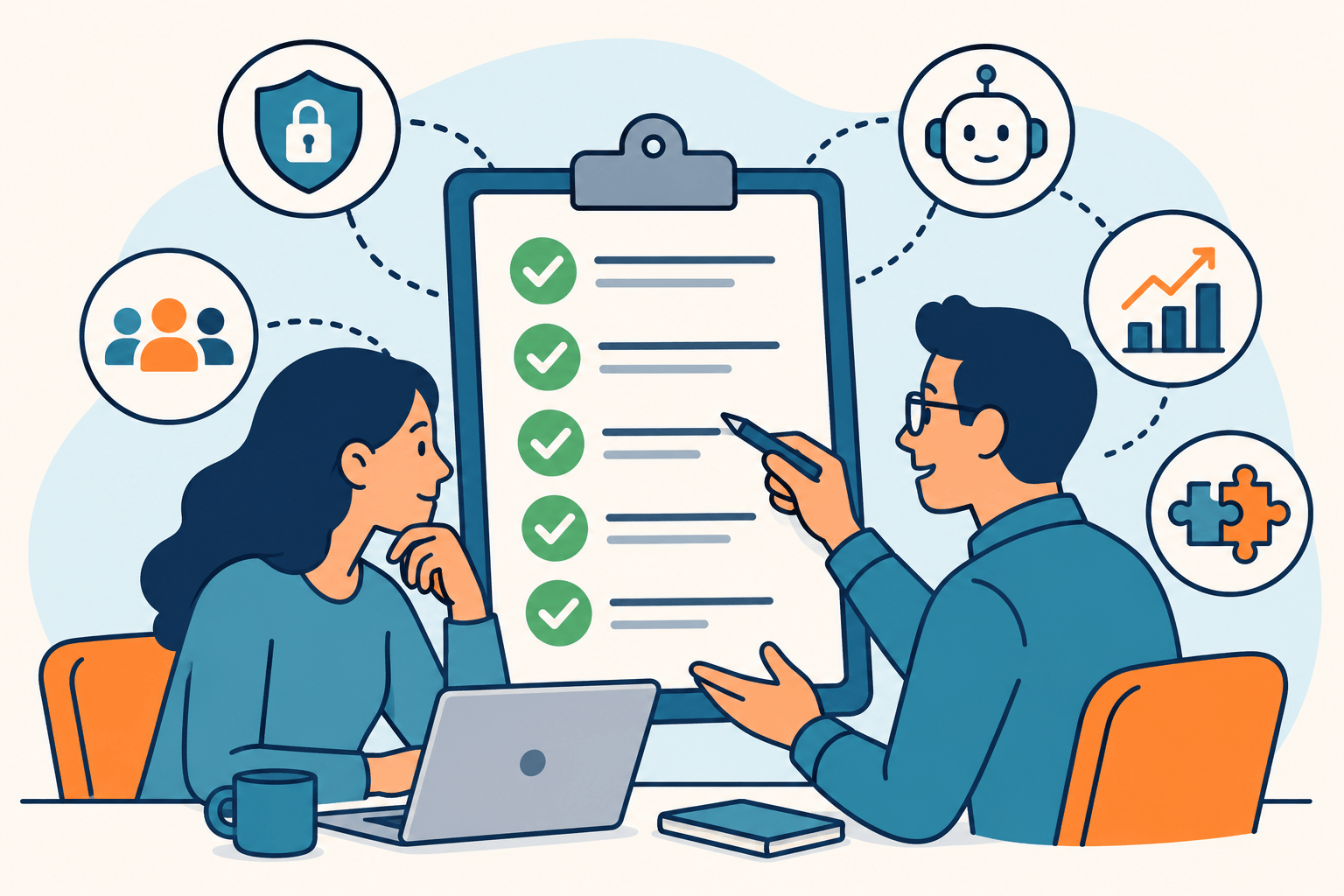
Here are five questions worth asking before you sign with any AI vendor. These will help you build a human-centered AI system with transparency, control, and the ability to stay at the front of a fast moving industry.
1. Are you locking us into a single model provider, or letting us choose?
The frontier of AI moves quickly, and the model that leads on one benchmark today often sits in third place next quarter. The teams that stay ahead of those shifts work in environments where they can compare outputs from multiple leading models side by side and choose the one that fits the task in front of them.
Braided was built so your team can chat with the latest models of GPT, Claude, and Llama in the same workspace. See how each one handles the same question differently, and route work to whichever one actually does it best. As the field evolves, you get the benefit of every new release without having to renegotiate a contract or retrain your people on a new tool.
2. Was this built for a person, or for a team?
Most AI tools were designed for a single user having a single conversation, which works well for personal use and starts to feel small the moment a team wants to build on each other’s work. The better tools treat AI as something a group thinks with, where prompts, projects, and outputs live in a shared space everyone can pick up and improve.
With Braided, your team can share prompts, organize results into projects, and refine answers together in real time. When someone leaves a thread mid-draft, a colleague can step right in where they left off. When a team member changes roles, the knowledge they built stays with the team rather than walking out the door with them.
3. Where does our data go, and what does the vendor do with it?
This is the question buyers tend to ask last and remember most, because the answer shapes everything that follows. Different vendors handle your data in very different ways, with some training models on what you type, some holding inputs for long retention windows, and some routing requests through third parties most customers never see.
Braided takes a clearer approach by design. Your data is never used to train models, prompts and outputs stay inside your workspace, and you have full visibility to your data at any time. That clarity is part of why teams in regulated industries like healthcare, legal, higher ed, and finance can adopt Braided with confidence, even where compliance reviews are typically the most demanding.
4. Are there any surprise costs I should be aware of?
The cost of AI tools has a way of changing after the contract is signed. Surprise upcharges, per-seat add-ons, premium model fees, and usage overages can quietly turn a clean line item into a moving target, and the budget conversation a year in often looks very different from the one that closed the deal. Most vendors in this space haven’t solved that yet.
Braided works differently. You get one annual price, and what we quote you is exactly what you pay. There are no surprise fees, no upcharges, and no in-app purchases sitting behind a paywall. Each model, every feature, and every seat is included from day one, so finance always knows what the number is
5. What does the rollout actually look like, and who carries the weight?
The smoothest rollouts start with a tool that fits into the systems your team already uses, so adoption can begin on day one rather than after weeks of provisioning, account creation, and access reviews. When integration is light, pilots move quickly, organization-wide use follows naturally, and IT gets to spend its time on the projects that matter most.
Braided supports single sign-on with Google Workspace and Microsoft 365, so the moment your IT team turns it on, your people log in with the credentials they already have. There are no new accounts to provision, no separate identity systems to maintain, and no parallel access policies to keep in sync. It’s one of the reasons IT leaders appreciate it when their organization chooses Braided.
The Decision Underneath the Decision
Every AI purchase eventually answers a deeper question about what you’re really buying, and the choice tends to come down to whether you’re paying for speed or for judgment, for a model or for a workspace your team will actually use long term.
The vendors built for the next year of AI will impress you in a demo. The vendors built for the next decade will give your team a place to think, choose, and improve over time. That’s a different category of tool, and it’s the category we built Braided for.
See Braided in Action
Braided is built around these five questions, with multi-model access, real collaboration, privacy by default, visibility for leaders, and a rollout your IT team will actually thank you for. If you want to see how it works, request a demo or reach out for a walkthrough.