
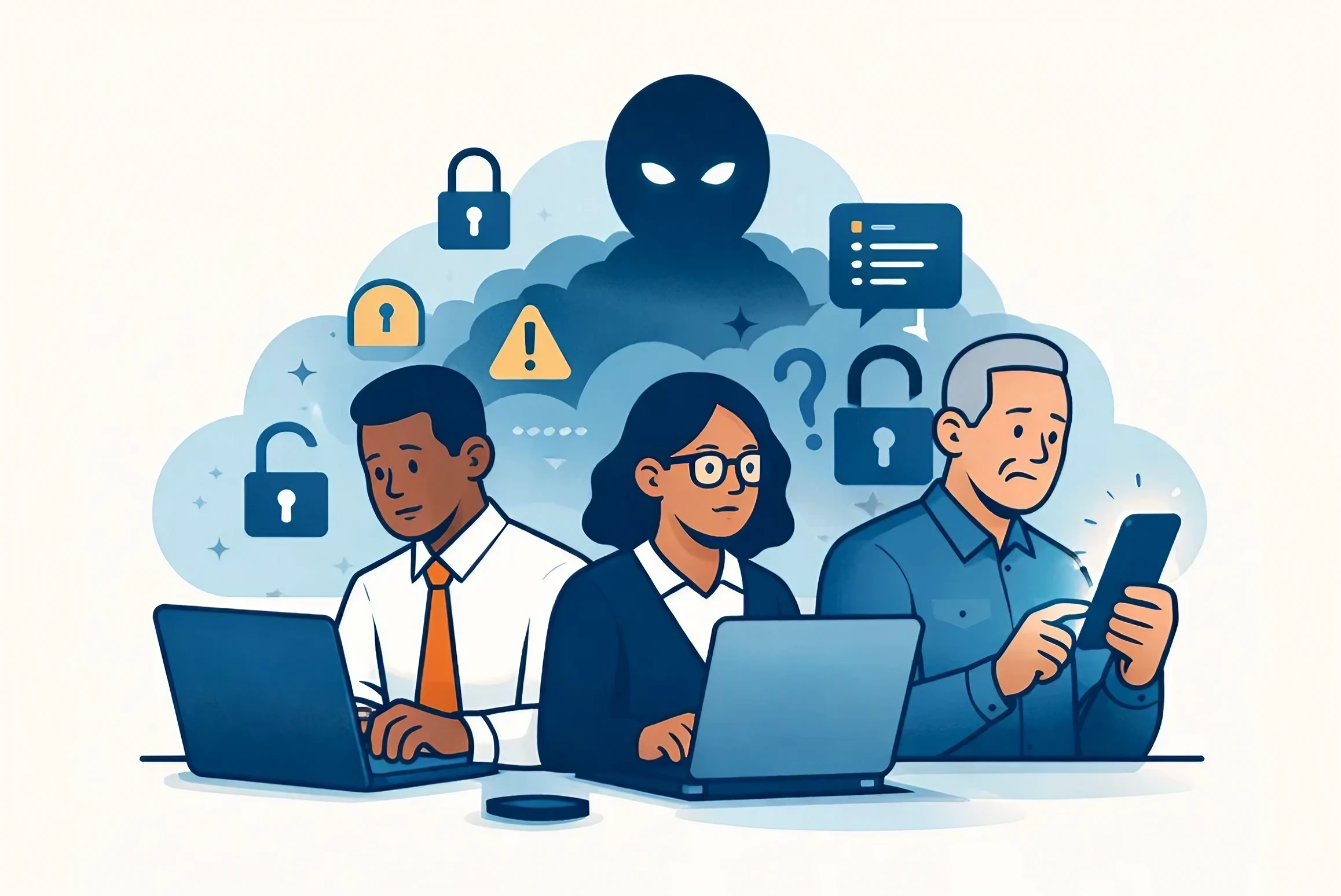
Shadow AI isn’t a malicious underground movement. It’s a natural response to modern work. Employees across industries are quietly using AI tools like ChatGPT, Claude, Microsoft Copilot, and Gemini to write, summarize, code, troubleshoot, or automate tasks.
They often do so without approval, without security safeguards, and without leadership visibility. This behavior isn’t driven by carelessness or defiance. It’s driven by resourcefulness. As Braided CEO Jay Mason explains, Shadow AI is simply: “Employees using unapproved AI tools to get their work done, often with good intentions.”
This isn’t the exception, it’s the norm. Research shows that while 90% of employees use AI, only 40% of companies have a paid plan, meaning more than half of enterprise AI usage occurs through personal accounts, free tools, or unvetted systems. The governance gap this creates is enormous.
Why Shadow AI Is Surging
Organizations want to move faster. They push for higher efficiency, quicker execution, and more innovation, but the systems meant to support this pace often move slowly. Procurement cycles drag. Approval processes stall. IT governance is rigid. Even when companies want to adopt AI, they frequently get stuck in pilot mode.
Meanwhile, employees feel the pressure to perform. They’re expected to hit ambitious goals, solve problems autonomously, and get more done with fewer resources. When internal processes can’t keep pace, they invent workarounds.
Jay captures the tension clearly: “The speed of innovation in your company is exceeding the speed of procurement.” When systems can’t keep pace with reality, people invent workarounds.”
The Hidden Risks Leaders Don’t See
The most visible concern around Shadow AI is security. When employees use unapproved AI tools, especially coding assistants, they may inadvertently expose proprietary code, passwords, API keys, customer information, or sensitive system logic. Free, consumer-grade tools can even train on that data, making the information accessible in ways the organization never intended.
But beyond the security implications, Shadow AI introduces deeper organizational risks.
1: Productivity Imbalances
Employees using AI become dramatically more productive, sometimes 10x faster, while others, who follow policy, struggle to keep up.
Jay describes the fallout: “You create an imbalance between those who have cheated the system and those who have followed the rules.”
That imbalance leads to:
- Resentment
- Loss of trust
- Recognition inequity
- Cultural fragmentation
2: Hidden Costs
Shadow AI also creates:
- Tool sprawl
- Redundant subscriptions
- Incompatible workflows
- Fragmented knowledge
Instead of one AI-powered company, you get 100 mini-companies, each with its own tools, patterns, and risks.
Shadow AI Is Not a Tech Problem
It’s natural for leaders to respond by trying to shut Shadow AI down. They attempt to restrict URLs, tighten policies, or introduce punitive rules. But as Jay points out, “This is not a tech problem. It’s a leadership and culture problem.”
Shadow AI is a symptom of deeper organizational challenges: slow procurement, under-resourced innovation, rigid governance, and the lingering effects of pilot paralysis. Companies experiment endlessly with AI but rarely move to production-scale deployment. Employees, meanwhile, are solving their own problems in real time, without waiting for approvals that may never come.
Why Employees Do It Anyway
Employees aren’t turning to Shadow AI to break rule, they’re doing it because they want to succeed. Jay explains: “They’re trying to work 10 times faster and achieve the goals leadership has set.”
Shadow AI is driven by speed, pressure and good intentions. Employees don’t want to hide their work. They just want to get their work done.
How Braided Helps Solve the Shadow AI Problem
Shadow AI thrives when employees don’t have access to fast, secure tools that actually help them do their work. Braided solves this by giving organizations a centralized, enterprise-grade AI environment where employees can use powerful models safely and efficiently.
Braided offers vetted models, non-training agreements, and unified governance, eliminating the risks that come from personal AI accounts or free consumer tools. It also gives employees a better, faster experience than their “DIY” alternatives, reducing the incentive to go rogue.
Instead of forcing teams into Shadow AI or slowing them down with restrictive policies, Braided delivers the balance organizations need: the speed employees want with the security leaders require.