
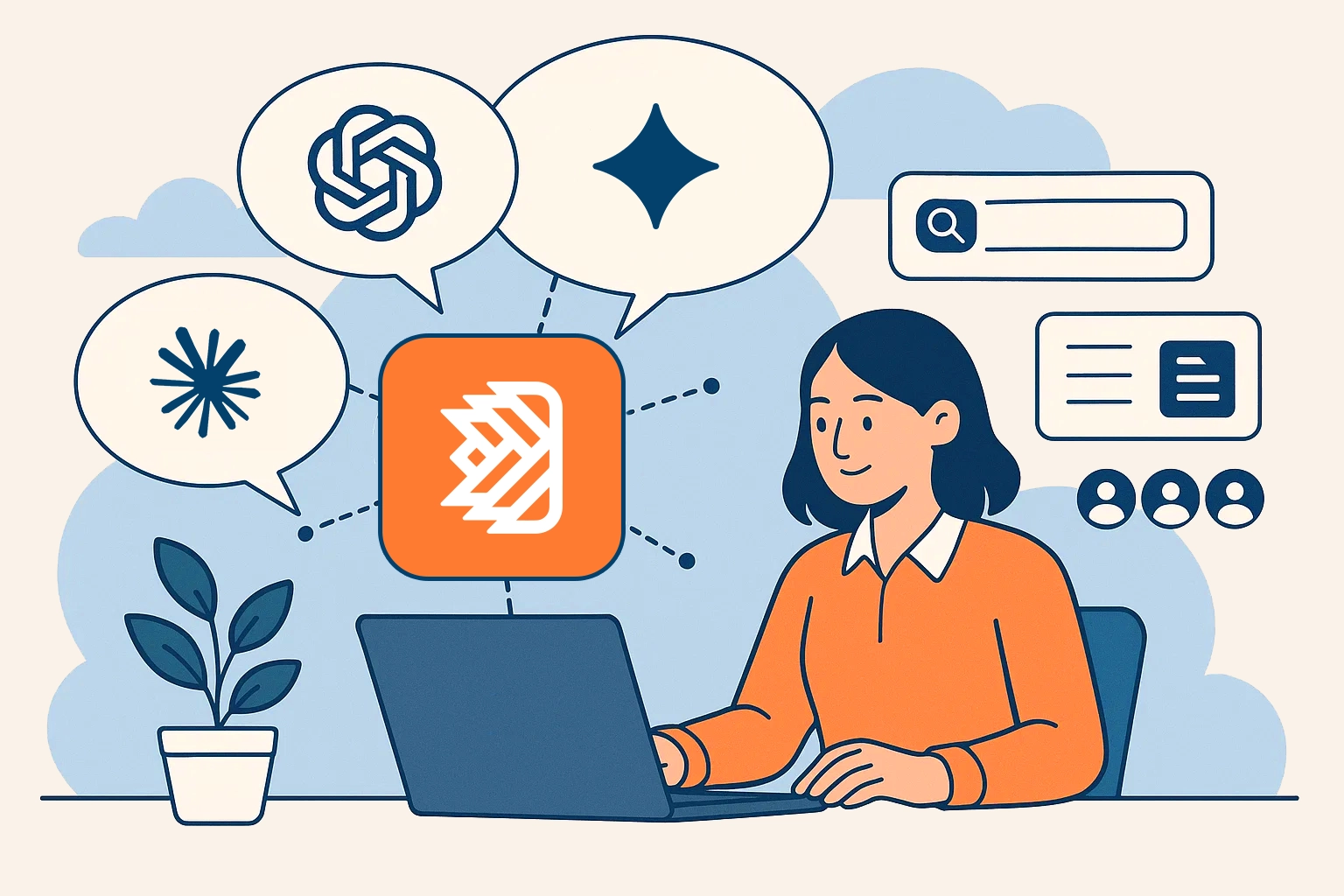
When I first started using AI at work, I treated it like a personal notepad: me, one model, cranking through tasks. But the more I used it, the more I noticed its quirks. Sometimes it crushed a project. Other times, it fell flat. That’s when I started testing different large language models side by side.
And wow, each had its own personality and strengths. ChatGPT wrote clever, human-sounding copy. Claude broke down long, technical documents like a champ. Gemini pulled in the freshest, most relevant info from the web. Together, they were like a well-rounded team, covering blind spots, sparking ideas, and delivering stronger results.
Why Multi‑Model AI Collaboration Matters
Working with one LLM is like having a team where only one person is allowed to speak. Collaboration between humans works because we see and build on each other’s thoughts. The same applies to AI, especially when you can see how teammates are prompting, refining, and iterating together.
The Messy Reality Without a Shared Space
Before Braided, managing multiple models was chaos:
- Constantly logging in and out of different platforms.
- Paying for multiple subscriptions.
- Copy‑pasting between tools.
- No single record of prompts, refinements, or decisions.
- Shadow AI use with people experimenting with unsanctioned tools outside company oversight.
How Braided Changed the Game
Braided didn’t just make it easier to use multiple models. It transformed the process into a truly collaborative experience. In one secure workspace, you can switch between ChatGPT, Gemini, Claude, and more within the same conversation.
Everyone shares the same thread, building on each other’s prompts to refine and improve results. Sign in is simple with your existing Google or Microsoft login, removing the hassle of new passwords. All AI activity stays in a visible, compliant space, giving leaders confidence in governance. And by replacing multiple individual subscriptions with one flexible, shared platform, teams save money while working more effectively together.
What I’ve Learned
When AI becomes part of a shared workspace, it is no longer just a tool. It is like adding another skilled teammate. You see how others think, how they refine prompts, and you end up with better, faster, more creative outcomes.
If your team is still using AI in silos, you are leaving value on the table. Try working together, in one space, with the right model for each job, and watch what happens.